
The NEC 220.87 Load Study,
Done for You.
Everything about the study itself: what the code requires, how the 30-day recording runs, what the report contains, what it costs, and what your inspector will ask. Sold under your brand, at your price.
Built for commercial electrical service contractors. Not sure the panel clears? Run the free headroom pre-check →
 Panel LP-1 · 30-day recordingLIVE
The Job that Stalls at “Is There Capacity?”
Calculated loads on older buildings come out far above what the service ever actually draws, and the job dies in a service upgrade quote the customer never approves. A recorded study answers with measured data instead.
Chargers on an Existing Service
Four dual-port chargers can pencil out fine on recorded demand and fail on a calculated load. The study is the difference between a charger install and a six-figure service upgrade conversation.
HVAC and Kitchen Loads
Replacement RTUs, added compressors, electrified kitchen lines. The equipment is sold, the panel schedule is full, and the inspector wants proof. Recorded demand data is that proof.
The Permit Package Itself
The deliverable is written to go into the submittal: recorded interval data, the 125 percent calculation, and the proposed load, laid out the way plan reviewers expect to see it.
What NEC 220.87 Actually Requires
Section 220.87 lets you size for added load using the existing service’s actual maximum demand instead of the full Article 220 calculation. To use it, the demand data has to meet the code’s conditions.
To Determine Existing Load from Demand Data:
Adoption and interpretation vary by jurisdiction and code cycle. Confirm the accepted method with your AHJ before submitting. Our reports are formatted to make that conversation short.
Compliance at Every Milestone
One study answers the capacity question, keeps the submittal clean, and leaves the panel ready for whatever the customer adds next.
Submittal-ready results
Recorded 15-minute data and the 125 percent calculation, laid out the way plan reviewers expect to see it.
Streamline your study
The kit records and streams itself. No logger to retrieve, no return trip, no customer IT ticket.
Stay audit-ready
Every report carries a unique QR code giving the AHJ direct access to the recorded data, plus an AI copilot that answers any question on the report.
Studies Ready When You Are
Whether it is your first study, an added panel, or a fleet, you order, track, and generate reports from one place. The kit ships pre-configured and pairs with a QR scan.
Every Report Ships Audit-Ready, with a QR Code
On the cover of every report is a unique QR code. The AHJ scans it and lands on the live evidence page for that exact study: the full 30 days of recorded 15-minute intervals, the peak, and the 125 percent calculation traced step by step.
An AI copilot sits on the same page and answers any question on the report, which interval set the peak, how the headroom was computed, straight from the recorded data.
You Clamp It.
We Do the Rest.
No portable logger to retrieve, no laptop in the electrical room, no return trip to pull data. The kit records, streams, and writes the report.
Kit Ships
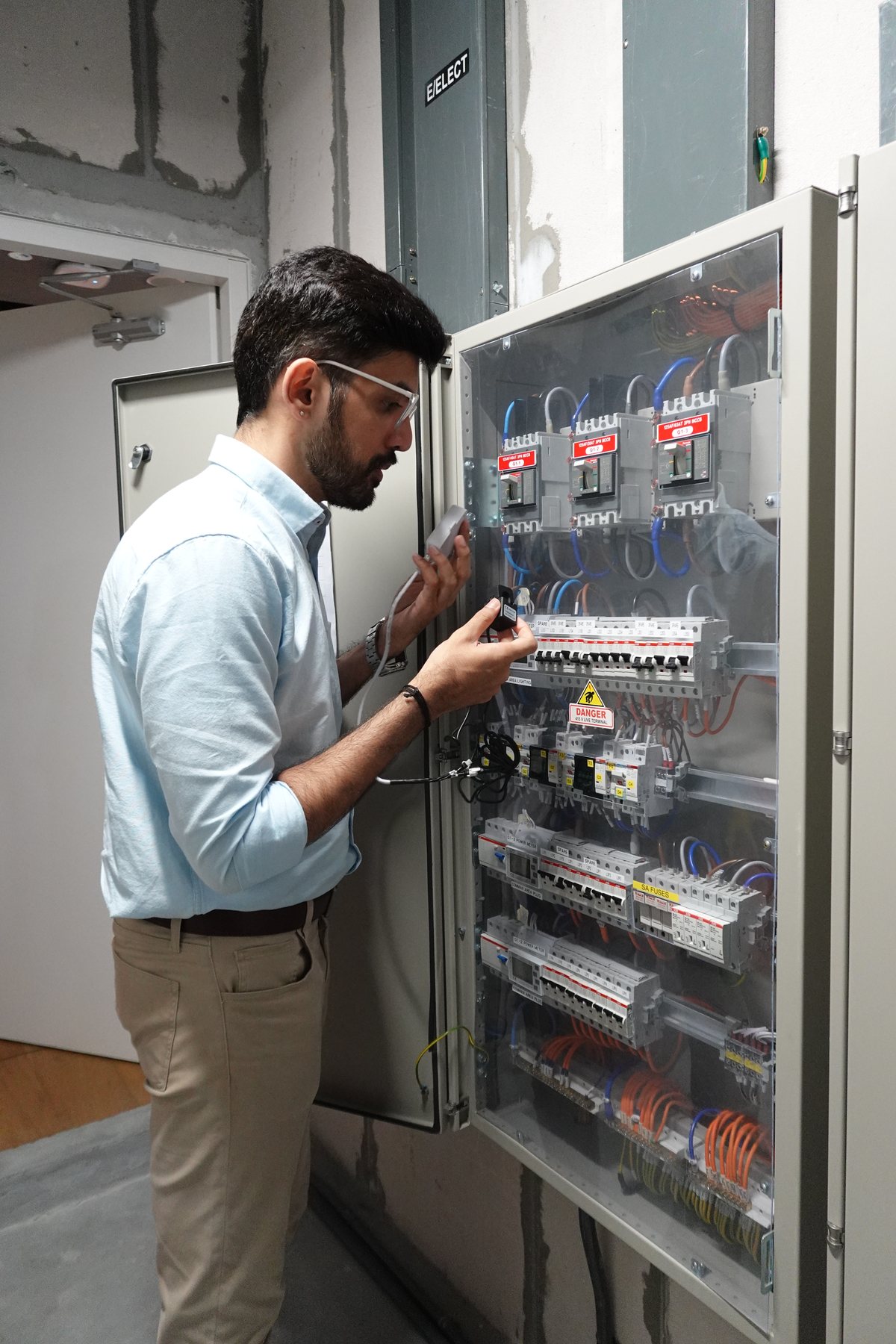
Order the study in the web app. A pre-configured kit with CT clamps and voltage taps ships to your shop or the job site.
Clamp and Pair
Clamp the CTs on the panel feeders during a routine visit. Scan the QR code to link the kit to the site. Live panel, no downtime.
It Records Itself
Data streams over onboard cellular at 15-minute intervals. No site Wi-Fi, no customer IT, no site visits. You watch it live if you want to.
Report in One Click
The study completes and generates the submittal-ready report, carrying your company's name and logo, not ours.
What’s in the Report
A document your customer keeps and your plan reviewer accepts, not a dashboard screenshot.
- ✓Recorded interval data, 15-minute demand across the full study window, charted and tabulated.
- ✓The 220.87 calculation, peak demand at 125 percent against service rating, with headroom in amps and kW.
- ✓Proposed load analysis, your planned addition applied against the recorded headroom.
- ✓Peak attribution, when the peaks land and which loads stack to cause them.
- ✓Panel condition notes, phase imbalance, voltage sags, and irregularities the recording surfaced.
- ✓Your branding throughout. Your logo, your company details, your customer relationship.
NEC 220.87 Load Study
Riverside Logistics Bldg B · Panel LP-1 · 400A / 480V 3Φ
The Sensors Stay in the Panel
After the Study Ships.
Every study leaves the panel instrumented and baselined. That turns a one-time report into monthly recurring revenue on your books, on hardware the study already paid to install.
The Study Proved the Spike.
The Guard Prevents the Next One.
The study already showed which loads stack into the demand peak. The sensor stays on, alarms as load builds toward the threshold, and names what is stacking while there is still time to act.
See Peak Demand Guard →One avoided spike typically pays for the year, and the account stays on your books.
What Contractors Ask Us First
Will you ever go direct to my customer?
No. The customer relationship is yours, permanently. We do not sell studies or subscriptions to building owners, and every report and alert carries your brand. Our business only works if yours grows, which is the point of the model.
Who owns the hardware and the data?
The kit is yours with the study. The recorded data belongs to you and your customer, exportable at any time. We use anonymized electrical signatures to improve fault detection, and nothing identifying the site or the customer leaves the platform.
Will my inspector accept the report?
The report presents recorded 15-minute interval data over a minimum 30-day window with the 125 percent calculation shown, which is the format 220.87 describes. Acceptance is always the AHJ's call, so we recommend confirming the method before submittal, and the report is structured to make that review straightforward.
What does the install actually involve?
Clamping split-core CTs on the panel feeders and landing voltage taps, done live in about 15 minutes by any licensed electrician. The kit connects over its own cellular link, so there is no customer network, no IT ticket, and no return visit to collect data.
Do I have to commit to a volume or a contract?
No. Order one study, run it on one panel, and judge the deliverable. Contractors who like the first report tend to order the next one for the job where the capacity question comes up, which is usually within the month.
Run Your First Study on Your Next Capacity Question.
One panel, 30 days, a submittal-ready report under your brand. If it does not win you the job, you are out one line item.
We never sell direct to building owners. The customer stays yours, the brand on the report is yours, and the recurring account is yours.